Loading...
Serving Ventura, CA and surrounding areas. (805) 833-5370
A slab that settles, cracks, or fails a city inspection costs far more to fix than to build right the first time. We build concrete slab foundations in Ventura designed for local soils, seismic code, and lasting performance.
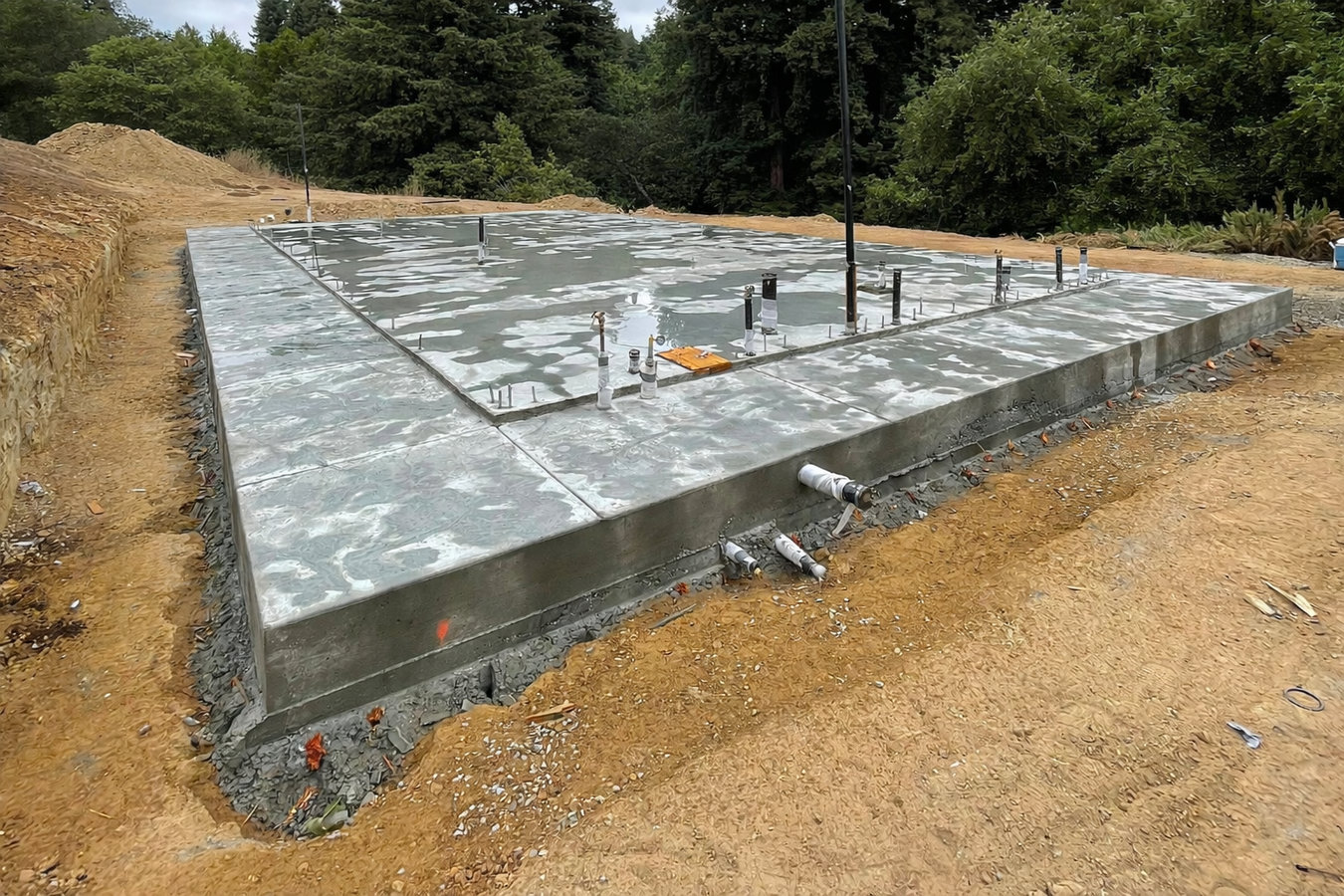
Slab foundation building in Ventura means grading and compacting the soil, installing a gravel drainage base and vapor barrier, setting rebar, forming the perimeter, and pouring the concrete in a single day - most residential slabs take three to seven days of active work, with another four or more weeks for the full permit and curing cycle.
Most Southern California homes built since the 1950s sit on a slab foundation. When you are building a new structure - an accessory dwelling unit, a garage, a room addition - a new slab is the starting point before any framing begins. In Ventura, the city requires a permit and inspection at multiple stages, which is not a hurdle but a layer of protection that confirms the work was done to code.
If your project includes concrete around the new structure, our concrete footings service can be built alongside the slab as part of the same coordinated scope.
Any new structure in Ventura - a garage, an ADU, a room addition - needs a properly permitted slab foundation before framing can begin. No existing slab, no framing start. The city inspection process verifies the slab is correct before you build anything on top of it.
Hairline cracks are normal in concrete and usually harmless. But cracks wider than a quarter inch, or diagonal cracks running from the corners of doors and windows, suggest the slab is settling unevenly. In Ventura, where clay soils shift with seasonal moisture, this kind of cracking deserves a professional evaluation sooner rather than later.
When a slab shifts, the framing above it shifts too - and one of the first signs homeowners notice is a door that now drags or a window that will not latch. If this happens after a wet winter or a long dry summer, it may point to soil movement underneath the slab rather than a framing problem.
If your flooring feels damp, your baseboards show water staining, or there is a persistent musty odor near the floor, the vapor barrier under your slab may have failed or was never properly installed. Ventura's coastal humidity makes this a real concern - moisture migrating up through a slab can damage floors and encourage mold over time.
Every slab project begins with a site visit to assess your soil, grading, and access conditions before we quote anything. From there we manage soil compaction, drainage base, vapor barrier, steel reinforcement, form setting, the pour, and surface finishing. Permits are included - we submit to the City of Ventura Building and Safety Division and schedule the required city inspections on your behalf. For projects that also require support structures around the slab perimeter, our concrete footings service can be coordinated in the same project visit.
When a slab is part of a larger new-construction scope that includes a full foundation system, our foundation installation service covers the full structural package - from excavation through inspection - for homeowners building a new home or a significant addition.
For homeowners adding a garage, accessory dwelling unit, or room addition that requires a new poured concrete base before framing can begin.
For builders and homeowners constructing a new single-family home or structure on a lot that currently has no foundation.
For any project in Ventura where California seismic building code applies - which is every new slab in this county.
For coastal and marine-influenced properties where humidity and ground moisture pose an elevated risk to flooring and indoor air quality.
For every project requiring a City of Ventura building permit - we handle the application, the scheduling, and the documentation.
For properties on sloped terrain or lots with fill material, where additional soil investigation and engineering are required before design.
Ventura sits near active fault lines, and the city's building code requires foundations here to be engineered for seismic movement - not just static load. That means more rebar, specific anchor bolt placement, and design review by a structural engineer before the permit is issued. The California Geological Survey maps Ventura County as one of the state's highest seismic hazard zones. Inland contractors who rarely work near fault lines often underestimate what this requires - and the difference shows up years later in how the slab performs.
The coastal climate adds a second layer of complexity. Ventura's proximity to the Pacific means year-round humidity and salt air that work their way into concrete over time if the slab is not mixed and protected correctly. We regularly serve homeowners across the region, from homes in Fillmore to hillside lots in Moorpark, and the soil and drainage conditions vary significantly even across those short distances.
We schedule a site visit - usually within one business day - to look at your soil, grading, lot access, and any existing structures before putting a number on the work. Phone estimates are not reliable for slab work because conditions vary too much lot to lot.
We submit the permit application to the City of Ventura and coordinate with a structural engineer when required for seismic detailing. Permit approval typically takes one to four weeks - we build this into your schedule from the start so there are no surprises.
On the first day of active work the crew grades and compacts the soil, lays the gravel drainage base, installs the vapor barrier, and places the steel reinforcement inside the forms. A city inspector visits at this stage to verify everything before the pour.
The concrete is poured and finished in a single long workday. The slab then cures over 28 days - we protect the surface during this period to prevent fast drying in Ventura's warm weather. A final city inspection closes the permit and gives you a documented record of the work.
Free on-site estimate. We handle the permit and city inspection. No pressure.
(805) 833-5370Ventura County is mapped as one of California's highest seismic hazard zones, and every slab we build includes the reinforcement and anchor bolt placement that local code requires. This is not an upgrade - it is the standard, and it matters when the ground moves.
We work across all 12 communities in our service area, from coastal Ventura to inland Moorpark and Fillmore. That range means we understand how soil conditions, grading, and lot access vary across this region - and we price your project based on your actual conditions, not a generic average.
The American Concrete Institute sets the standard for moisture protection in concrete flatwork - we follow those standards on every pour. For Ventura's marine climate, that means a properly lapped and sealed vapor barrier is included in every slab we build, not offered as an option.
City of Ventura permit applications require specific plans and documentation that can trip up contractors unfamiliar with the local process. We submit complete applications the first time and schedule inspections around your timeline, so permit delays do not push your start date back.
Foundation work is invisible once it is done - which is exactly why it has to be done right the first time. Every slab we build is documented, inspected, and matched to the actual conditions of your Ventura lot.
Full foundation installation for new homes or major additions, covering excavation, forming, seismic reinforcement, and city inspection from start to finish.
Learn moreConcrete footings for fence posts, retaining walls, and structural columns - often built alongside a slab to complete the ground-level concrete scope in one visit.
Learn morePermit season fills up fast - locking in your start date now means your project stays on schedule and ahead of the backlog.